Designing flexible BESS layouts
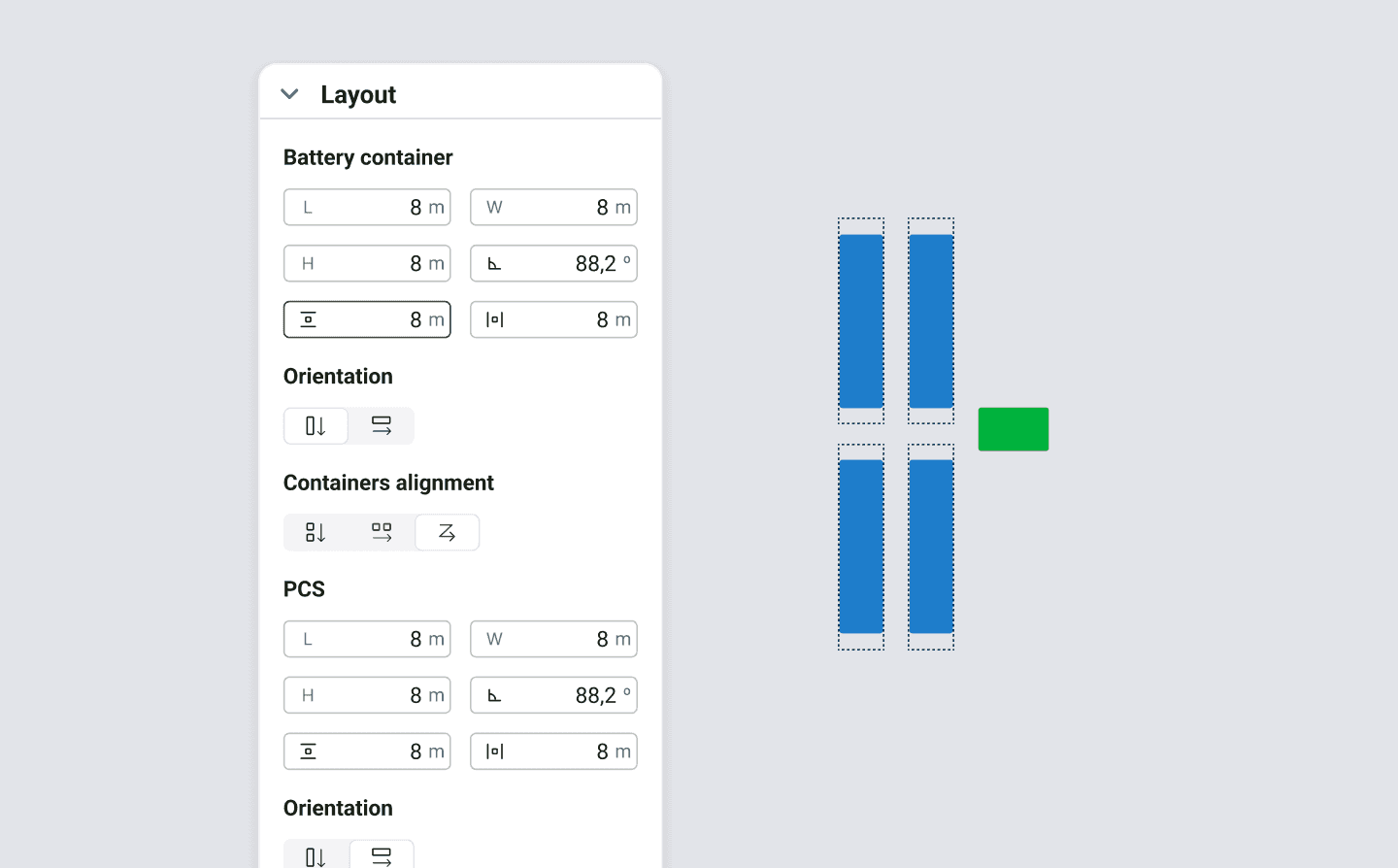
Layouts give engineers control over how battery systems are arranged on site, moving beyond rigid, auto-generated designs to more realistic, buildable configurations. Choose from common setup patterns, then adjust distances and setbacks to match the real site.
Context
RatedPower is redefining how utility-scale solar and storage projects are designed, evaluated, and delivered, supporting developers and engineers across the full project lifecycle, from site definition through layout design to performance and financial simulation. By automating complex workflows, the platform cuts design time by over 90% and has powered 64,000+ projects worldwide.
Role
I've owned Storage 0 to 1, research, direction, scope, and every interaction detail, working closely with a product owner, customer success, and engineering.
My biggest impact wasn't shipping screens, it was challenging scope. The BESS Topologies MVP was proposed as four fixed preset cards; I pushed for a panel-based model instead, trading a faster build for one that could handle any real-world topology.
Problem
The algorithm generated optimised layouts, but lacked flexibility
When a site had irregular boundaries, spatial constraints, or an opportunity to squeeze in additional blocks that broke the standard installation pattern, the tool couldn't accommodate it.
So developers exported the layout, opened AutoCAD, and manually redrew it to fit the reality of the site.
The result was a fragmented workflow split across three tools, with RatedPower's automatically generated documents no longer reflecting the actual design.
Solution
Automate first, adjust when it matters.
Full control over battery layouts, without leaving the tool.
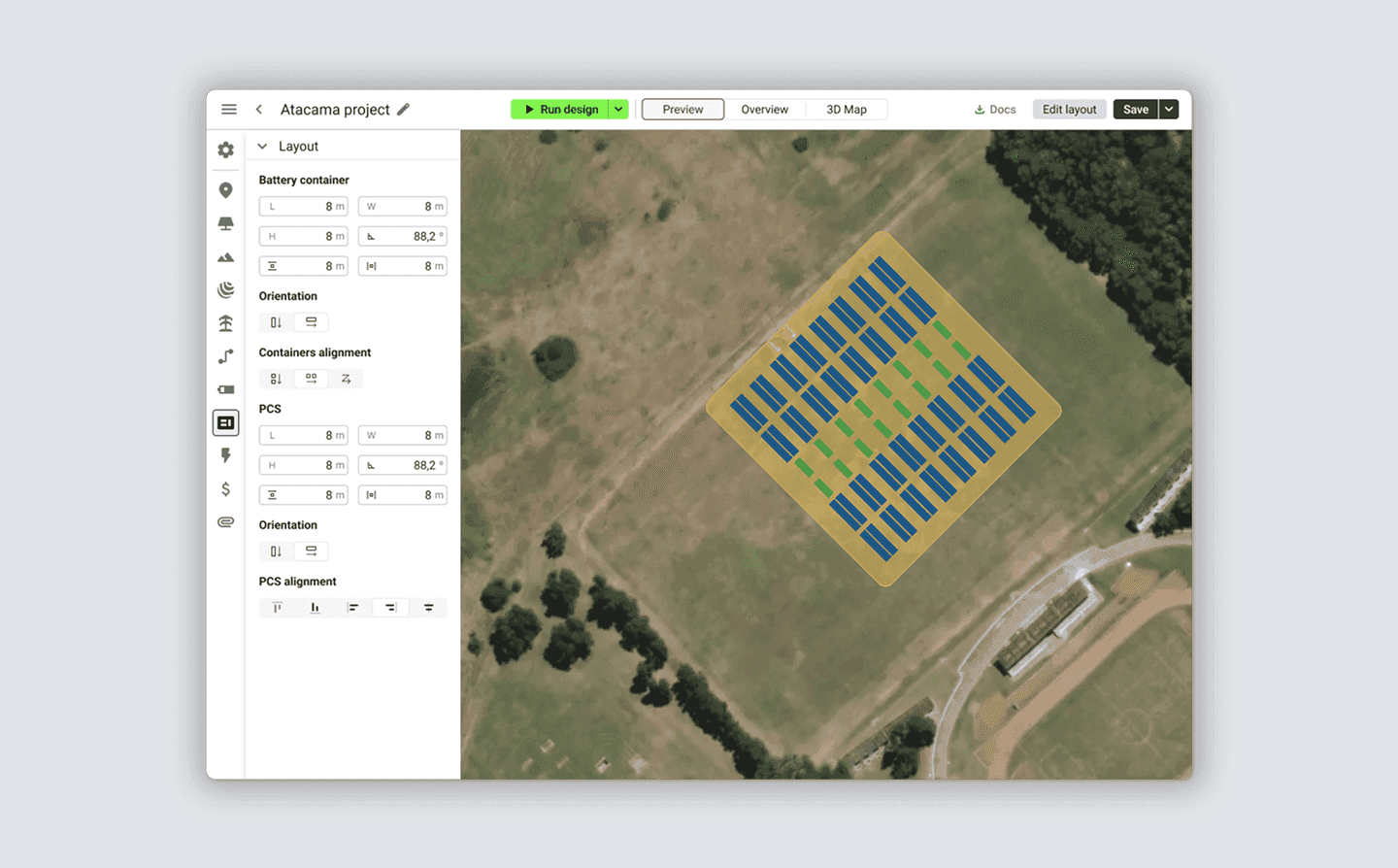
I designed a layout editor that sits on top of RatedPower's automated output, giving developers direct control over their BESS blocks.
Place, rotate, and reposition blocks directly on the map. Adjust orientation, margins, and arrangement by hand. Add blocks beyond what the algorithm placed, all while the platform keeps recalculating energy output, cable lengths, and project documents in the background.
The result: a workflow that keeps the precision of automation and adds the flexibility real sites require. No AutoCAD. No spreadsheet reconciliation. No outdated documents at handoff.
Takeaways
How much control is actually helpful, and where does it just become more work for the user?
The BESS Topologies MVP forced a question I kept coming back to for the rest of this project: how much control is actually helpful, and where does it just become more work for the user?
Four preset cards would have been faster and safer to ship, but they'd have solved the common cases and failed the irregular sites this feature existed for in the first place — so I pushed for a panel-based model instead, scoped to the decisions that actually depend on the site, while the platform kept recalculating everything else underneath it. That's the principle I took from this project: automate first, adjust when it matters — the real work isn't adding control, it's knowing which decisions are worth handing back.